
Life drawing
Plan observation and practice around short and long poses, considering continuity, viewing angles, lighting and breaks.
Arrange model participation for life drawing, sculpture and art photography around the creative theme, with agreed poses, timing, working conditions and use of the resulting work.
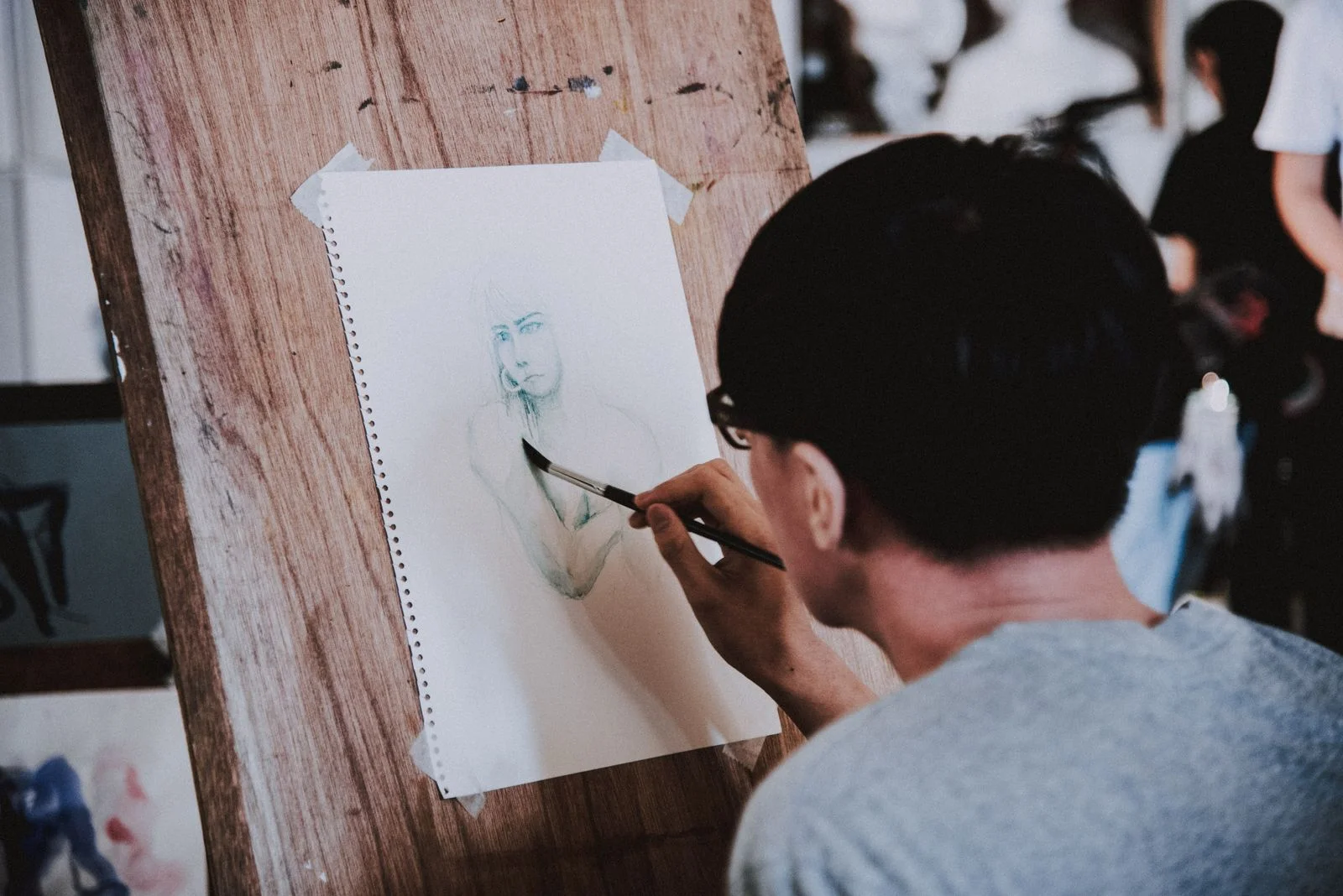
How a model participates depends on the creative goal, medium and on-site arrangements.
Plan observation and practice around short and long poses, considering continuity, viewing angles, lighting and breaks.
Provide poses for observation from different angles, with attention to posture, balance and spatial relationships. Check continuity requirements across repeated sessions.
Discuss movement, expression, clothing and setting in relation to the theme, with clear shooting arrangements and an agreed scope for image use.
This example combines gesture studies and longer poses. Participants agree on timing, movements and breaks according to the actual creative work.
Explain the learning goals and observation points, organise participant positions, and avoid unexpected changes that disrupt the model's work.
Provide agreed poses and movements, communicating physical comfort and any adjustments needed.
Prepare the space, lighting, changing and rest facilities, and coordinate timing, people and on-site arrangements.
Confirm the range of poses, viewing positions, lighting and photography arrangements, including clear ways to start, pause and finish.
Use short poses to observe the whole figure and establish a sense of movement before longer studies.
Maintain the agreed pose and check position and direction after breaks to reduce unnecessary changes.
Check that the agreed work is complete, clear the space, and handle reference photographs and subsequent use as arranged in advance.
Describe the creative medium, theme, participant numbers, location, date and duration, along with requirements for poses, clothing, setting and photography. Unrelated personal details are not needed in an initial enquiry.
Provide a space suited to sustained work, stable lighting, clear viewing positions, and suitable changing and rest facilities. Discuss equipment or unusual movements in advance.
Agree in advance whether photography is permitted, how photographs may be used, what may be published and how credits will appear. Participation does not imply consent to every form of recording or distribution.
Completion is based on the agreed session time, poses and collaboration, rather than the style or reception of the artist's finished work.
They need separate discussion. Drawing may depend on sustained poses, sculpture on multiple viewpoints, and photography on framing, movement and shooting pace. Plan around the specific creative goal.
Confirm the model's consent and agree how photographs will be used and stored. Permission for a drawing session should not be treated as permission to publish photographs.
An enquiry starts a discussion. Specific working arrangements are established only after both parties agree on the service, time, place, fees and participation.
Share your goals, existing materials and timing so we can discuss the work involved.