
Artwork feature · Online exhibition example

How Light
Shapes a Picture

Rain, shade and water offer three different viewing experiences. From clear street perspective to flowing colour, explore how painters make light part of the composition.

Each work includes basic information, an image source and viewing prompts. Follow the chapters in order or return to compare details.

Claude Monet, Water Lilies, complete artwork
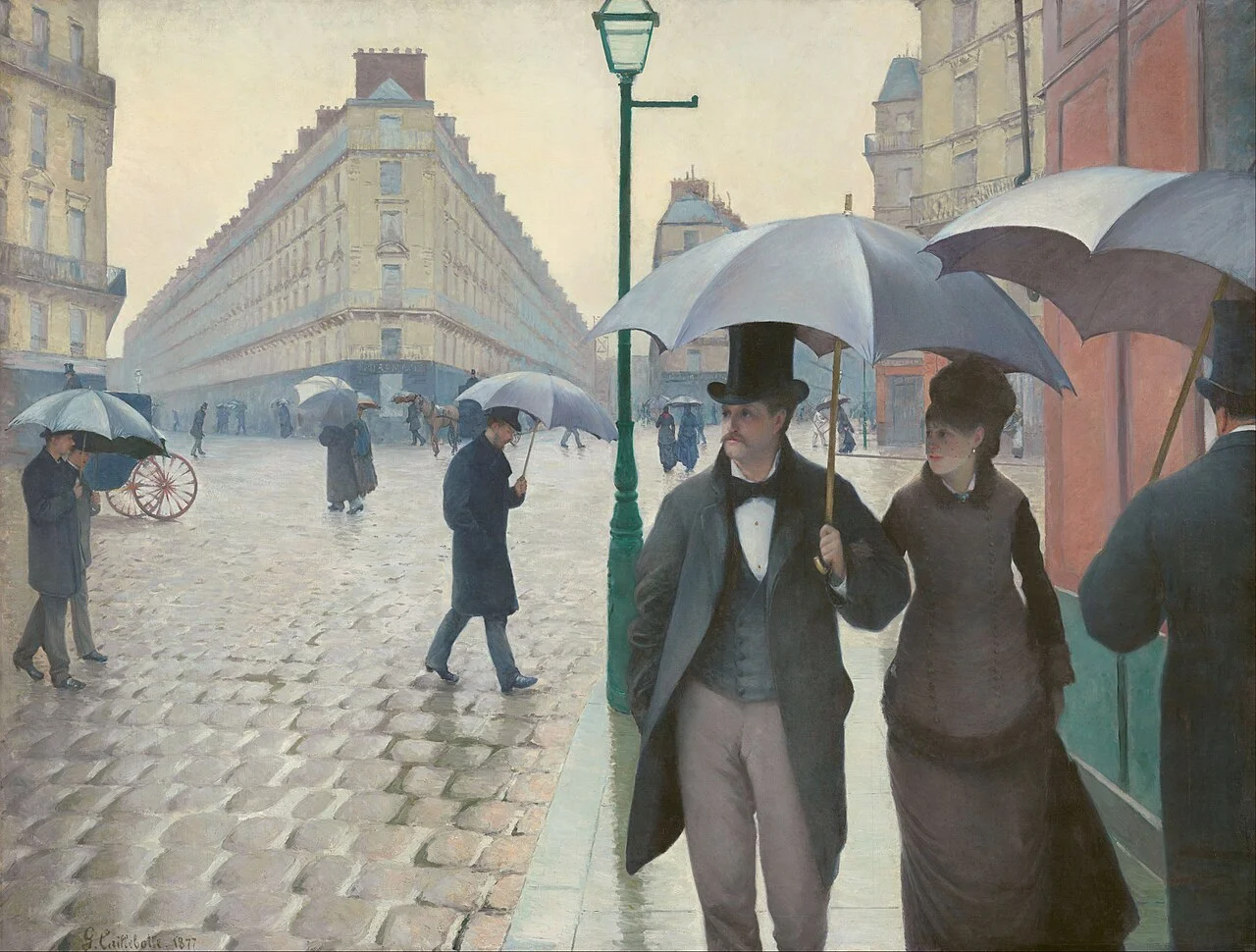
Gustave Caillebotte, Paris Street; Rainy Day, complete artwork
Paris Street; Rainy Day
Gustave Caillebotte · 1877 · Oil on canvas
Art Institute of Chicago collection · Collection record · Image source
01 / Space in the rain

Soft light can still define space

The street's perspective is clear: lines in the road converge into the distance, separating the foreground figures from the buildings behind them. There are no sharp boundaries of sunlight, yet outlines, scale and position create depth.

Find the structure of the space

Follow the edges of roads and buildings into the distance, noticing how they lead your eye down the street.

Compare near and far

Clothing, umbrellas and faces are easier to distinguish in the foreground, while distant pedestrians grow smaller. Consider how this change strengthens the sense of space.

Notice the colours of rain

Similar greys in the road and sky connect the picture, while dark clothing gives it a stable visual focus.
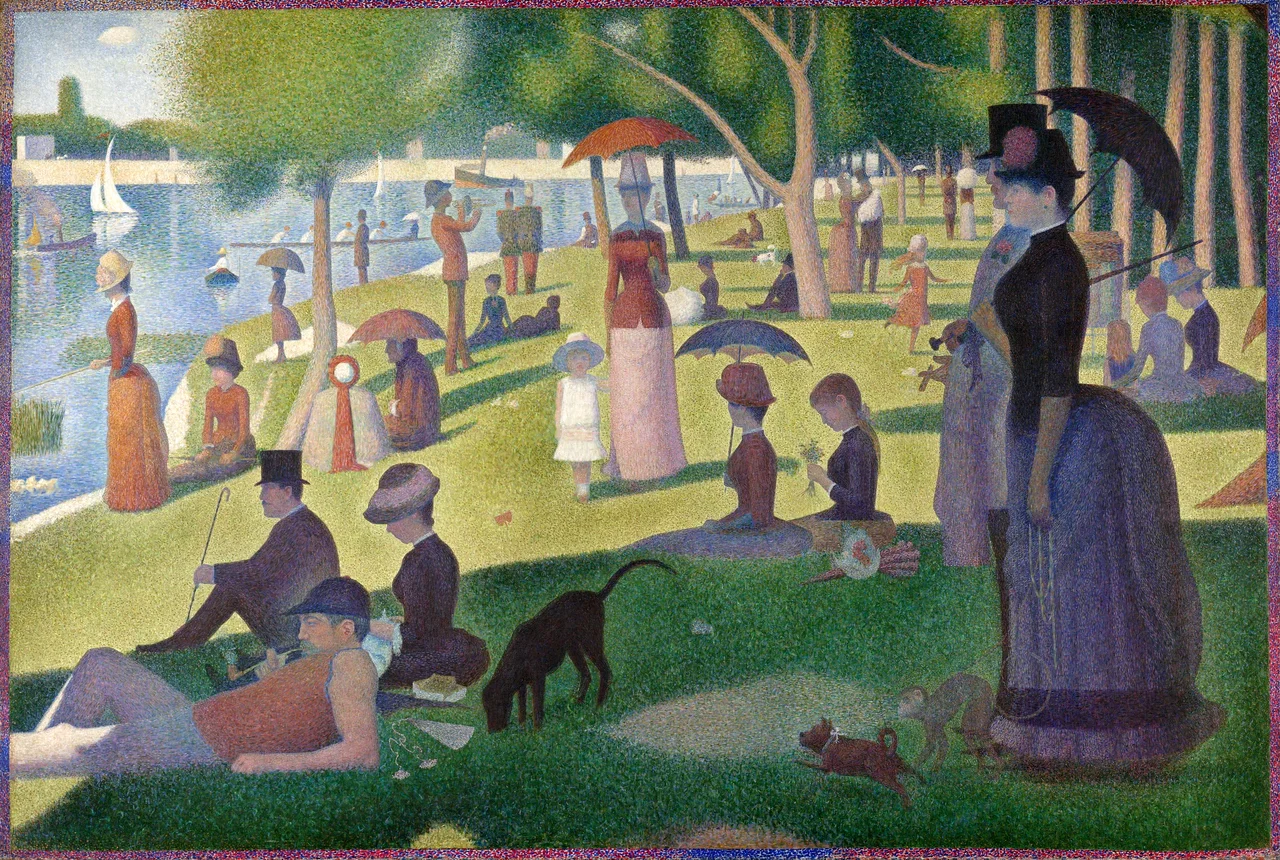
Georges Seurat, A Sunday on La Grande Jatte, complete artwork
A Sunday on La Grande Jatte — 1884
Georges Seurat · 1884–1886 · Oil on canvas
Art Institute of Chicago collection · Collection record · Image source
02 / Shade and sunlight

Light and shade give the figures a rhythm

Light does more than illuminate the figures: it divides the grass into distinct areas. These light and dark zones structure the composition, with standing, seated and reclining figures whose poses relate to the surrounding space.

Compare light and dark areas

Compare the shaded foreground with the bright grass in the middle, tracing the boundary between them across the picture.

Observe the gaps between figures

The figures are separated by spaces of different sizes. Notice the rhythm these gaps form with trunks, umbrellas and the riverbank.

From the whole to the dots of colour

Up close, small marks of colour are visible; from farther away, they form figures and shade. Each distance invites a different focus.

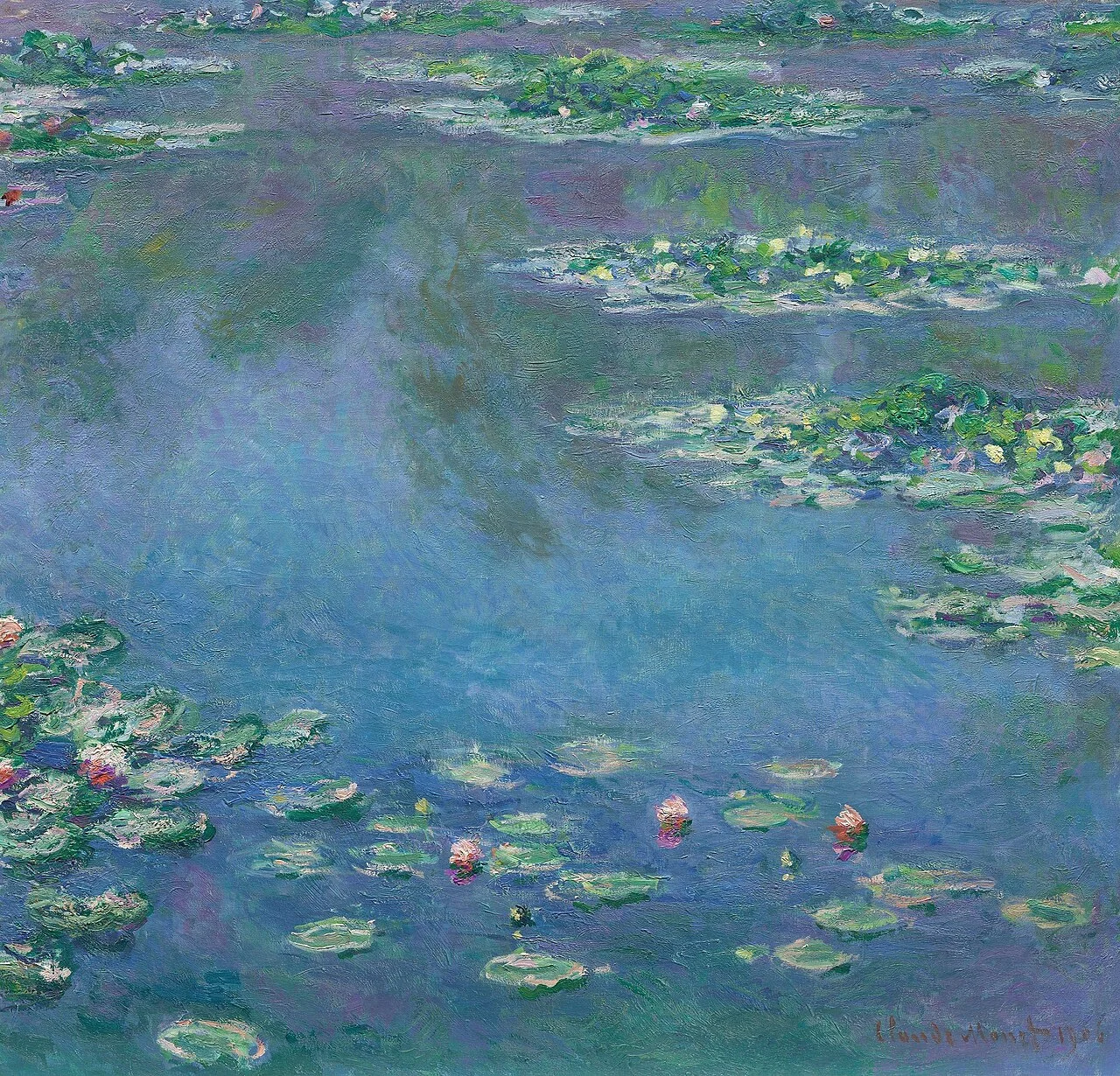
Claude Monet, Water Lilies, complete artwork
Water Lilies
Claude Monet · 1906 · Oil on canvas
Art Institute of Chicago collection · Collection record · Image source
03 / Reflections on water

Reflected sky makes space fluid

There is no horizon dividing sky from land. Water lilies float on the surface, while surrounding colours suggest reflections. Look for the plants and reflected light, then explore how they mingle on the same water.

Find recognisable shapes

Leaves and flowers give the eye a place to rest and a reference for the looser brushwork around them.

Compare colour temperatures

Notice how blue-violet and green sit beside the warmer colours of the flowers. Their differences keep the surface from appearing still.

Look at the edges

The water extends beyond the frame without a clear beginning or end. Looking does not have to follow a single fixed route.

LOOK AGAIN

Three paintings, three roles for light

Return to the works and compare how space, light and colour function in each composition.

A rainy street

Find space in outlines, proportions and perspective. Soft light can still create a clear sense of depth.

Figures in the shade

Explore composition through light and dark areas and the gaps between figures. Light helps organise the crowd into a rhythmic whole.

A pond reflecting the sky

Look for relationships in colour and brushwork. Recognisable shapes mingle with reflections, creating a more fluid viewing experience.